
What is involved in installing an EV charger at home?
A home EV charger is installed on its own dedicated circuit, with correctly sized cabling, RCBO safety switch protection and an isolation switch, and then fully tested. Before that, the electrician checks your switchboard and your supply, because some homes need a switchboard upgrade or three phase power first.
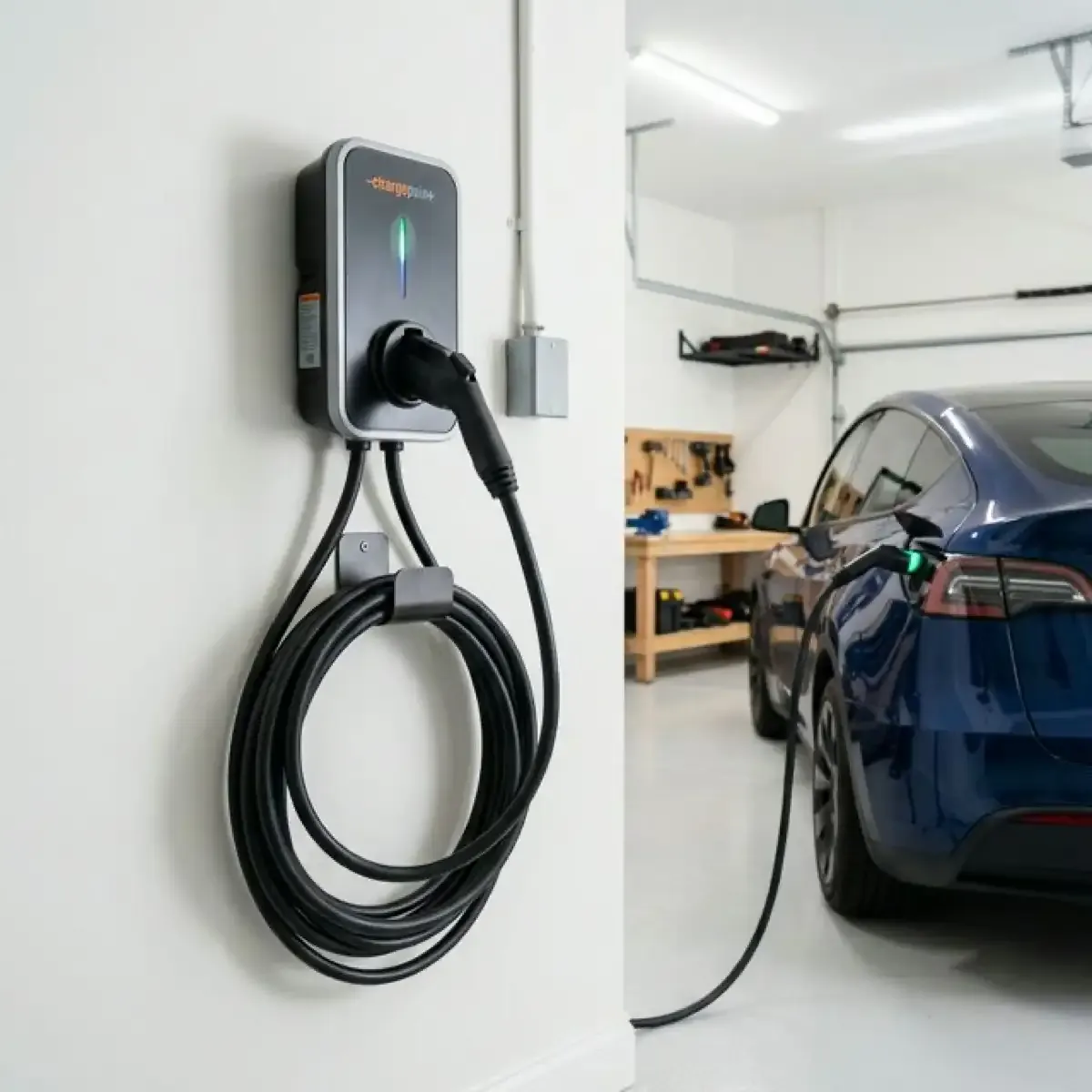
What a home installation includes
A home EV charger lets you charge overnight with convenience and safety. Wall-mounted chargers are fitted in garages, carports and driveways, and the work generally covers:
- Site assessment: checking your electrical supply, switchboard and where the charger will go.
- A dedicated circuit: an EV charger needs its own circuit so it runs safely without overloading others.
- Correctly sized cabling: routed from the switchboard to the charger.
- Protection: an RCBO safety switch and an isolation switch.
- Earthing: the charger is correctly earthed.
- Testing: the installation is fully tested to Australian electrical standards.
Chargers usually come with a 5 m or 7 m charging cable, so think about where the car's charging port sits when it is parked.
Single phase or three phase?
Most home installations run on single phase power with a 7 kW charger, connected on a 16 amp or 32 amp RCBO. That is more than enough for overnight charging at home. The circuit capacity and load balancing are checked so the charging point is reliable.
Three phase chargers of 11 kW to 22 kW charge much faster and suit homes with high electrical capacity. A three phase upgrade is only needed if you want faster charging, plan to install a 22 kW charger, or already run several high-load appliances. Our page on the types of EV chargers compares the options.
Upgrading to three phase
Moving to three phase power is often part of installing an 11 kW or 22 kW charger. It can involve the supply upgrade, switchboard changes and mains cabling to meet the requirements of the electricity distributor, and that work needs a Level 2 electrician.
How fast an EV charger charges
Charging speed depends on the charger's kilowatt (kW) rating and whether your property has single or three phase power. A 7 kW single phase charger typically gives a full charge in 6 to 10 hours. A 22 kW three phase charger can bring that down to around 2 to 4 hours. The right size depends on your car, how far you drive and your electrical capacity.
Does your switchboard need an upgrade?
It depends on the switchboard's condition and how much spare capacity it has. If it is outdated, full, or cannot handle the extra load of a charger, an upgrade may be needed. The switchboard is inspected as part of the installation, and any upgrade is done so the charger runs safely.
Apartments and strata buildings
EV chargers can be installed in apartments, strata complexes and shared garages, but they need more planning. That includes body corporate approval, load calculations and a metering solution. Load sharing and separate billing let several residents charge without overloading the building's electrical capacity.
Solar and home batteries
If you have solar or are thinking about a home battery, an EV charger can be scheduled around solar generation, battery capacity and household demand. That helps reduce how much power you draw from the grid to charge the car.
How long installation takes
Most home EV charger installations can be finished within a day. The time depends on the cable route, access to the switchboard and whether any upgrades are needed. Commercial and multi-unit installations can take longer.
When to call a licensed electrician
Call a licensed electrician to assess your supply and switchboard before you buy a charger, or when you are ready to install. For running costs, see how much it costs to charge an electric car at home. For help, see our EV charger installation service.