
What is the difference between an RCD and a circuit breaker?
The difference is what each one protects. An RCD, or safety switch, protects people: it cuts the power within milliseconds when it detects current leaking. A circuit breaker protects the wiring and appliances on a circuit: it switches off when the circuit is overloaded.
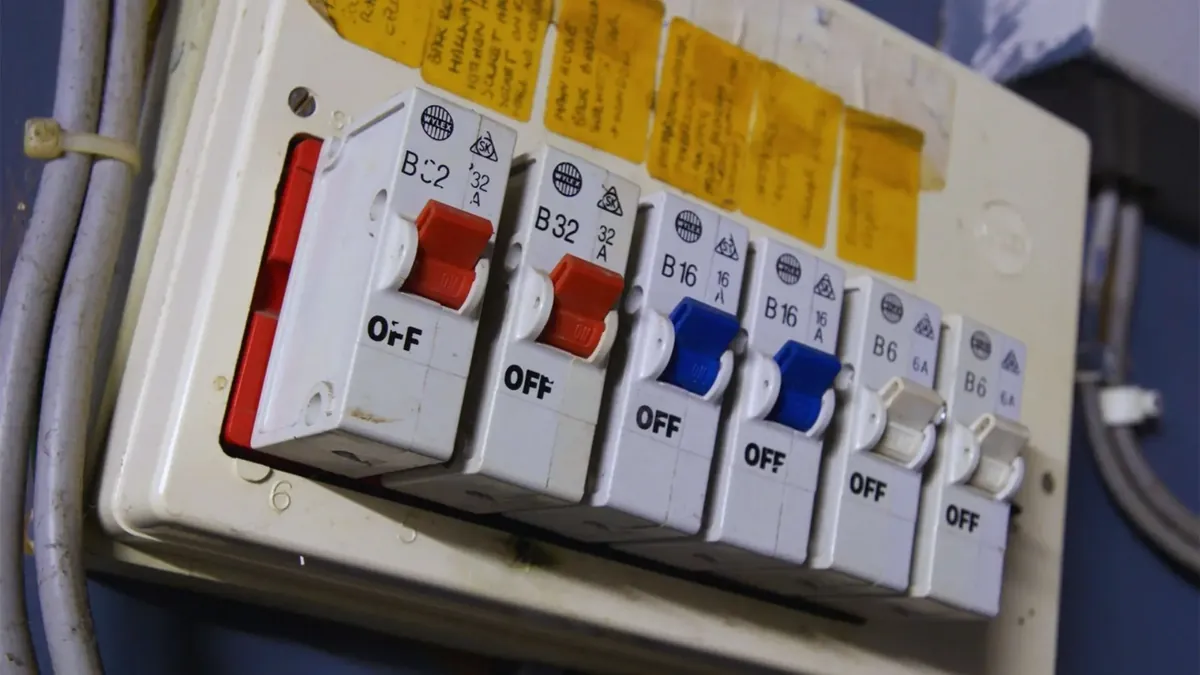
The two devices side by side
| RCD (safety switch) | Circuit breaker | |
|---|---|---|
| Protects | People, from electric shock | Appliances and wiring on a circuit |
| Trips when | Current leaks from the circuit | The circuit is overloaded |
| Acts on | The electricity supply it covers | A specific circuit |
What an RCD does
A residual current device is designed to stop a person getting an electric shock. When it detects a current leak, it switches off the power within milliseconds, so the leaking current does not flow through a person.
RCDs come in three main forms:
- Switchboard: the most common type, fitted on the switchboard alongside the other protective devices.
- Portable: plugged in between an extension lead and a tool or appliance that is not otherwise protected.
- Power point: built into a power point in places such as workshops or bathrooms, where it watches the current to anything plugged in.
A fixed RCD must be installed and connected by a licensed electrician.
How to test an RCD
- Find the RCD on your switchboard.
- Turn off the electrical equipment around the building.
- Press the test button.
- Check which systems and appliances have lost power.
- Turn the RCD back on once everything has been checked.
What a circuit breaker does
A circuit breaker watches over a specific circuit and protects the devices and appliances connected to it. When too much current runs through the circuit, which is called an overload, the breaker detects it and switches off the power before the devices are damaged.
Signs that a circuit is being overloaded include:
- A tripped breaker: the switch on the switchboard has flipped.
- Dimming lights: lights dim when more appliances are switched on.
- Warm or buzzing outlets: power points and switches buzz, feel warm or smell odd.
- Weak appliances: appliances and tools do not work properly or lose power.
What to do when a circuit breaker trips
- Find the circuit breakers, usually inside the main switchboard.
- Work out which breaker has tripped and which circuit it controls.
- Switch off the lights and appliances on that circuit.
- Turn the breaker back to the on position.
- Check that the lights and equipment on the circuit work again.
If you see signs of overloading, have a licensed electrician inspect the circuit. Our complete guide to switchboard upgrades covers when a board needs replacing, and why a safety switch keeps tripping covers repeated trips.