
First check what is on your switchboard. If it has circuit breakers, unplug the appliance that was running, push the tripped switch fully off and then back on. If it has ceramic fuses, leave them alone and call a licensed electrician.
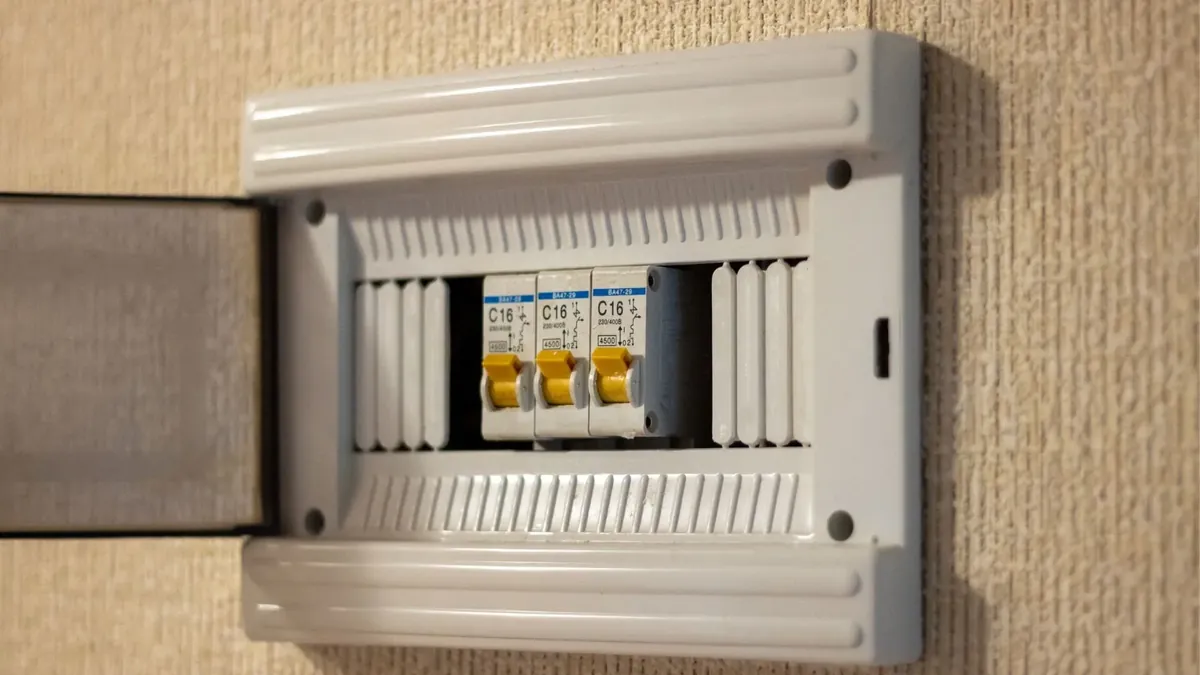
Check it is safe first
A blown fuse is a safety device doing its job, and it is not usually an emergency. If there is a fire or smoke, get everyone out and call 000. For the electrical warning signs below, step away from the switchboard and call an emergency electrician:
- You smell burning plastic or a strange fishy odour.
- The fuse box feels hot.
- You see black scorch marks around switches or wiring.
- You see sparks at the switchboard.
What kind of switchboard do you have?
Look at the board from a safe distance. Homes usually have one of three setups, or a mix:
- Ceramic fuse wedges: small porcelain blocks that pull out of the board, found in older homes. Anything to do with these is a job for a licensed electrician.
- Circuit breakers: toggle switches that flip off when a circuit is overloaded.
- Safety switches (RCDs): similar to a breaker but with a test button. They protect against electric shock, which fuses and breakers do not.
Resetting a tripped circuit breaker
On a modern board, a tripped breaker sits in the off position or halfway between on and off.
- Unplug the appliance you were using when the power cut out. Kettles, heaters and hair dryers are common triggers.
- Find the tripped switch on the switchboard.
- Push it firmly all the way to off, then flip it back to on.
If the breaker trips again straight away, stop and call a licensed electrician. A safety switch can be harder to reset, and often has to be pushed fully off before it will latch on.
Why ceramic fuses are a job for an electrician
Leave ceramic fuses to a licensed electrician. You cannot reliably tell from the outside whether a ceramic fuse has blown, as hairline breaks in the wire are not always visible. Fitting wire that is too thick stops the fuse protecting the cable behind the wall. Our page on ceramic fuses and circuit breakers explains how the two differ.
If the fuse keeps blowing
A fuse that keeps blowing is a sign that something on the circuit draws too much power. Common causes are:
- Overload: too many high-draw appliances on one circuit.
- A faulty appliance: a short circuit inside an appliance, or a frayed cord.
- A wiring fault: damaged insulation, rodent damage or failing connections inside the walls.
To find a faulty appliance, unplug everything on the circuit, reset the breaker and plug things back in one at a time.
When to call a licensed electrician
Call a licensed electrician if your board has ceramic fuses, a breaker trips again immediately, several circuits are affected, or you can see scorching or melted plastic. For help, see our old fuse box replacement service.