
Why replace an old fuse box?
Many older fuse boxes have no RCD protection and were never built for modern loads such as air conditioning, induction cooktops and EV chargers. Replacing one means removing the old ceramic or plug-in fuses and fitting a modern switchboard with circuit breakers and RCBO safety switches. The result is better protection against overloads, short circuits and electric shock.
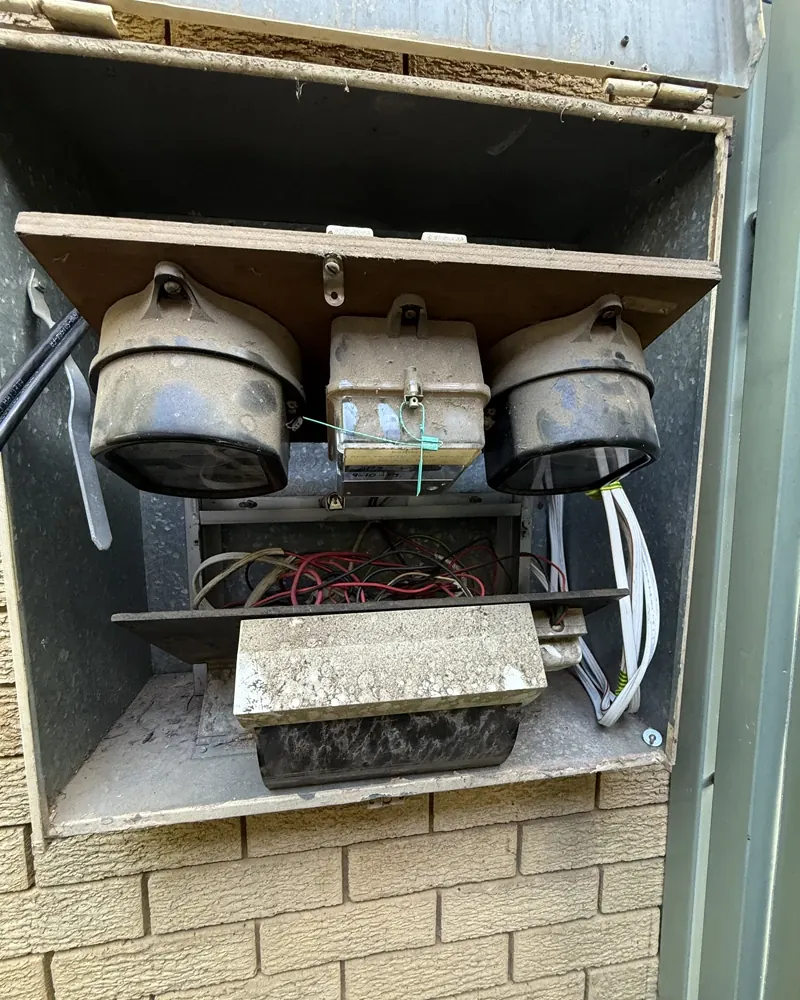
Signs your fuse box needs replacing
Common signs that a fuse box is due for replacement include:
- Blown fuses, especially on the same circuit.
- Frequent tripping.
- Flickering lights.
- A burning smell near the board.
- Heat marks on or around the board.
- Buzzing sounds from the board.
- Ceramic fuses still in use.
Older homes often also have outdated backboards or wiring that is no longer considered safe. If you are not sure, have an electrician inspect the fuse box and tell you whether it needs replacing or a repair will do.
Hazards often found in old fuse boxes
Many old fuse boxes were installed decades ago. They can fail without warning and often give poor protection. These are the hazards most often found when they are opened up.
Asbestos backing panels
Asbestos backing panels were widely used in older fuse boxes. With age they can become friable, meaning they break down easily and release hazardous fibres when disturbed. That puts the people in the home and any tradesperson at risk. A replacement includes identifying, isolating, removing and disposing of the panel safely under current safety rules, then fitting a modern fire-rated backing board.
Ceramic fuses
Porcelain or rewireable ceramic fuses rely on a thin wire that can overheat, wear out or be replaced with wire of a higher rating, which greatly increases the fire risk. Replacing them with circuit breakers and RCBO safety switches gives faster fault detection, automatic disconnection and far better protection. Our page on ceramic fuses and circuit breakers explains the difference.
Cotton-insulated wiring
Cotton-insulated wiring was once standard but is now a major safety concern. As the cotton and rubber insulation ages, it dries out and cracks and can leave live conductors exposed. That raises the risk of arcing, short circuits and fire, especially alongside an old fuse box. Where it is found, targeted circuit upgrades or a full rewire are recommended.
VIR wiring
Vulcanised Indian Rubber (VIR) wiring is common in older properties and is one of the most dangerous wiring types still found in homes. The insulation turns brittle and can crumble when touched, leaving live wires exposed. If it is found during a fuse box replacement, it must be replaced with modern TPS cable.
What a fuse box replacement includes
A replacement is tailored to the home's load and safety needs, but it typically includes:
- Removing the old fuses and unsafe components.
- Fitting a modern switchboard with circuit breakers.
- Installing RCBO safety switches.
- Replacing worn cabling at the board where needed.
- Updating the circuit labels.
- Testing the circuits and issuing compliance certification.
Meter protection devices
A fuse box replacement often needs a new meter protection device, or MPD, to meet the requirements of Ausgrid and Endeavour Energy. An MPD protects the meter from overcurrent and is now a compliance requirement for many upgrades.
When a Level 2 electrician is needed
Some fuse box work needs a Level 2 ASP electrician. That applies when the job involves service fuses, metering equipment, consumer mains, MPD installation or work on the network connection. It is common when a defect notice is involved or when the supply capacity is being increased.
A defect notice is sometimes issued when a fuse box is inspected during a smart meter installation. Common causes include asbestos backing panels, missing MPDs, cotton-cloth wiring, and old porcelain fuses or main switches.
Repair or replace?
A repair can be enough when the problem is limited to one faulty breaker, a loose connection or a damaged circuit causing nuisance trips. If the fuse box is outdated, overloaded or keeps faulting, replacing it is usually the safer long-term option.
Adding high-load appliances
EV chargers, ducted air conditioning, induction cooktops and renovation circuits can push an old fuse box beyond its safe capacity. Replacing the fuse box gives those circuits the right protection and helps prevent overload trips.
When to call a licensed electrician
Call a licensed electrician if you notice any of the signs above, if your board still uses ceramic fuses, or if you have received a defect notice. If a fuse has just blown, see how to fix a blown fuse in your house. For help, see our old fuse box replacement service.