
What are the main types of lighting?
The four main types of lighting are fluorescent, incandescent, outdoor solar and LED. Each has its own place: fluorescent tubes in commercial buildings, incandescent and halogen globes in older homes, solar lights outdoors, and LEDs almost everywhere, because they use far less energy and last longer.
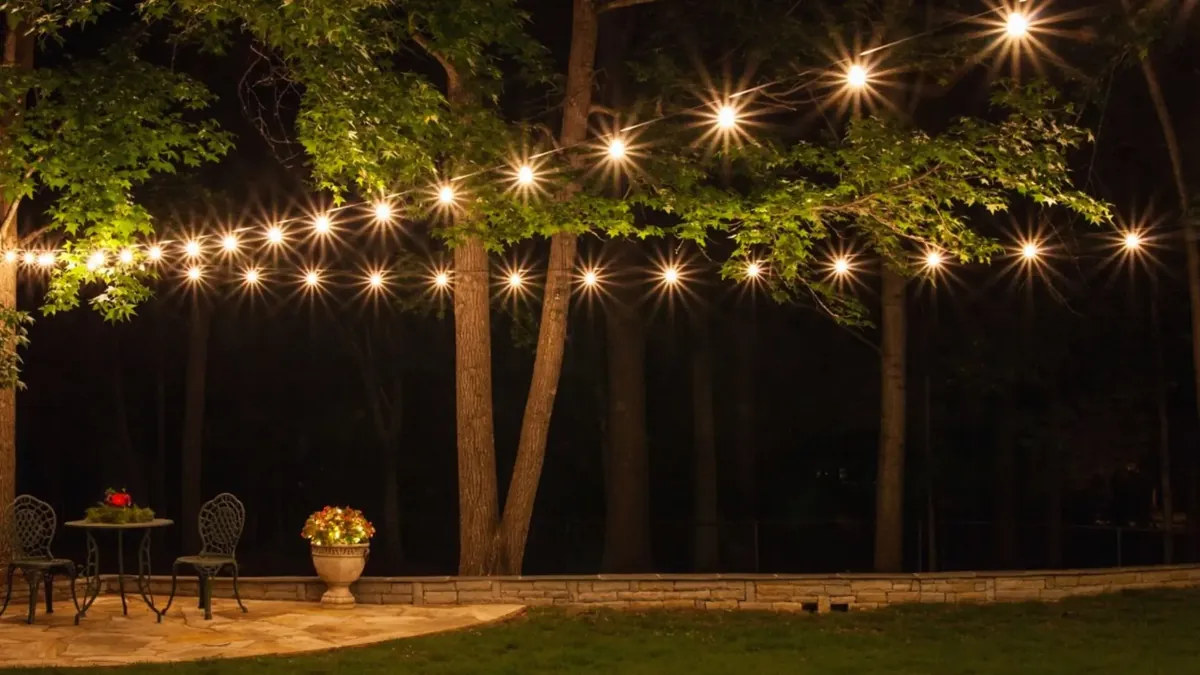
The four types at a glance
| Type | How it works | Where it is used |
|---|---|---|
| Fluorescent | A compact lamp (CFL) or a tube | Homes for CFLs, commercial and industrial areas for tubes |
| Incandescent | A heated coil, or a halogen globe | Older homes, spot and track lighting, lamps |
| Outdoor solar | Solar cells charge a battery by day | Pathways, lamp posts, security lighting |
| LED | Light-emitting diodes | Downlights, commercial lighting, decorative lighting |
Fluorescent lighting
Fluorescent lighting comes in two forms. Compact fluorescent lamps, or CFLs, have a built-in ballast and a screw base, and are the type found in homes. They are much more efficient than incandescent globes, last far longer and suit table lamps, pendants, ceiling fittings, floodlights and wall fittings. Most are dimmable.
Fluorescent tubes and circular lamps are more common overall, but rarely in homes. They light large areas efficiently, so they are mainly used in commercial and industrial buildings.
Incandescent lighting
Incandescent lights, sometimes called A-line lamps, come in three types:
- Standard incandescent: a tiny coil is heated to make light. They are the least efficient option, and some older models no longer meet current standards.
- Halogen: more efficient than a standard incandescent and longer lasting, so cheaper to run despite a higher purchase price. Used for spot, focal and track lighting and in lamps.
- Reflector lamps: light a focal point or a specific area, for flood, spot and down lighting, indoors and out.
Outdoor solar lighting
Solar lights are an efficient and cheap way to light outdoor areas, because they cost nothing to run. Solar cells turn sunlight into electricity, which is stored in a battery for use at night. They are used on pathways, lamp posts and security lighting. Some need direct sunlight and others only a little exposure.
LED lighting
LEDs have become the most popular choice because they give high quality light and use very little energy. They last longer, run cooler and are often considered more comfortable to live with. Incandescent and CFL globes release most of their energy as heat, while LEDs do not.
LEDs produce a white light that lights a room well, and they shine in one direction, which is why they suit downlights. Their main uses are:
- Downlights: ambient lighting in most settings.
- Commercial and industrial: streets, car parks, walkways, refrigeration and task lighting.
- Decorative: festive and coloured lighting, because they use little energy and show colour well.
If an older dimmer makes your LEDs flicker, read our complete guide to light switch replacement. For who can swap a switch, see can I replace a light switch myself.