
What is a data point?
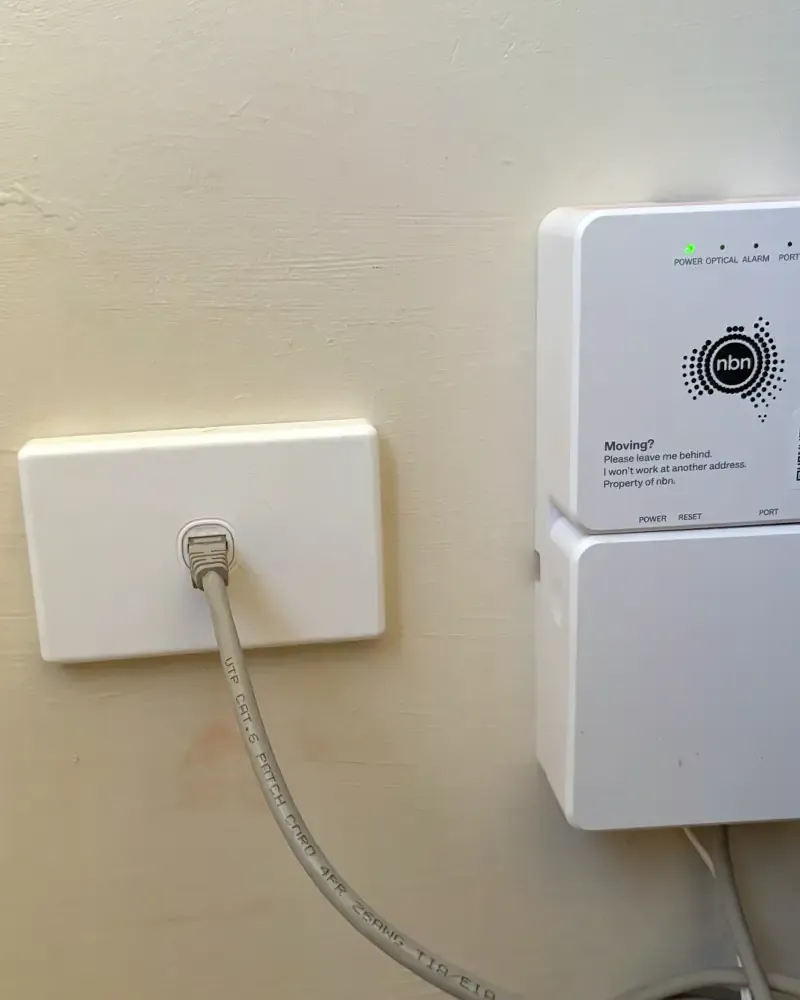
A data point is a wired connection in a wall that extends your network from the router or modem to a device in another room. The wall plate is the cover that sits over the data point, hides the cables and gives them a safe way into the wall. Data points are used where a wired connection works better than WiFi.
What data points are used for
Where the wireless signal in a building is weak, a wired connection is often preferred. A data point brings the network straight to the device. Common uses include:
- Computers and laptops
- Printers
- Home security and CCTV cameras
- NBN connection points
- Gaming consoles
- Home theatre rooms, TVs and other media devices
- Smart wiring hubs
Data points can also cut down the number of loose cables in a room and strengthen the network connection. Building or renovating is the easiest time to add them, but they can be installed at any time.
Types of wall plate
A wall plate covers the cables and keeps them away from people, while letting them enter the wall safely. The cables can stay hidden behind the wall instead of running across the room. Common types are:
- Data wall plates, which connect devices such as computers and gaming consoles directly to the network cables.
- Electrical wall plates, which cover lights and other main electrical points.
- Cable entry and exit plates, which have a larger opening for places with many cables, such as behind a TV.
- Audio and visual wall plates, which give the exact connections needed for TVs and entertainment systems.
How data points and wall plates are installed
Every job is different, depending on the location, how easy the access is and how many points are needed.
Running the cables
A short run can be quick, while running cables through a whole home or building can take a full day. Turns and drilled holes are kept to a minimum, and the cables are handled carefully.
Fitting the wall plate
The plate is usually mounted straight onto the wall. On a weaker wall, such as plasterboard, a mounting bracket or an in-wall mounting box gives it a stable base. On brick or concrete, a surface mounted box is used instead.
Connecting and testing
The cables are connected to the wall plate, either screwed in place or snapped into position. Each connection is then tested and inspected to make sure it works.
Getting data points installed
Data point installation should follow the Australian cabling standards. Our data cabling guide explains the cable types behind each point. For help, see our data cabling installation service.