
What are the main types of smoke alarms?
The two main types of smoke alarm in homes are photoelectric and ionisation. Photoelectric alarms pick up smouldering fires sooner, while ionisation alarms respond faster to flaming fires. A photoelectric alarm is recommended in every sleeping area and the paths between them.
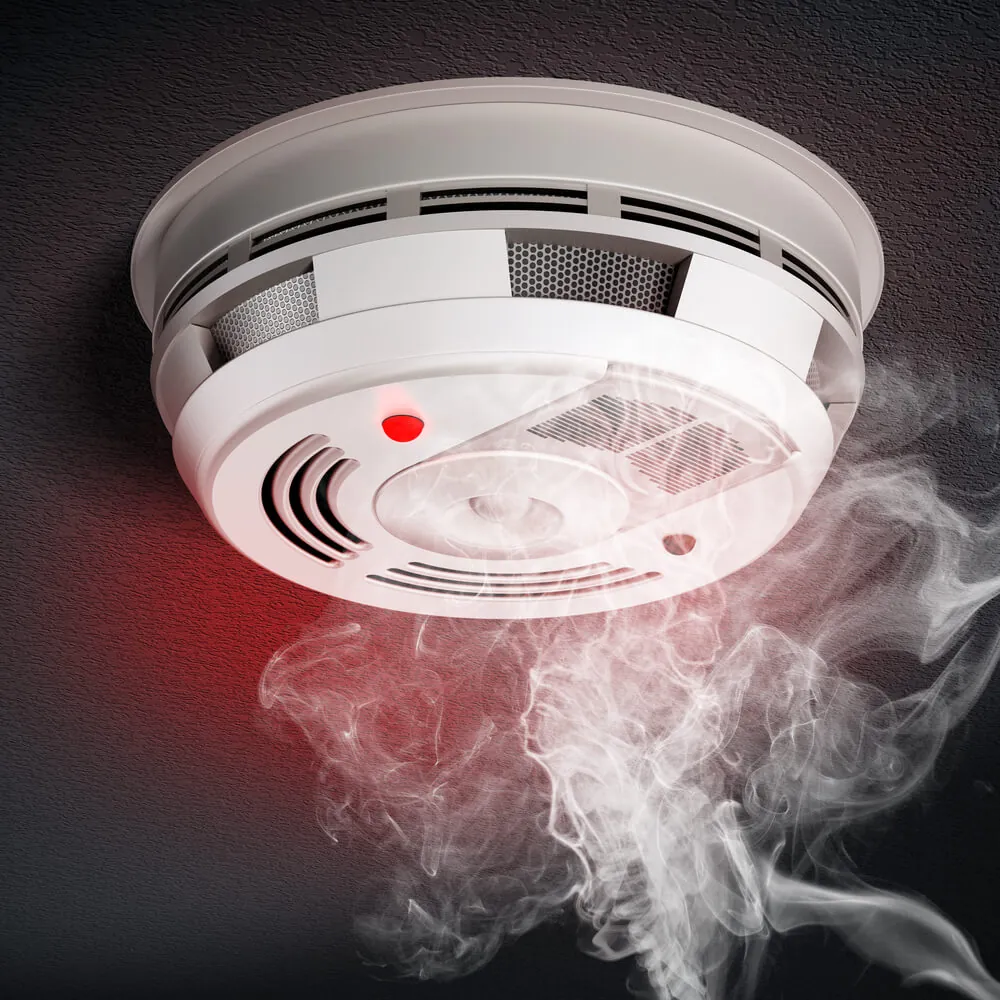
The two types side by side
| Photoelectric | Ionisation | |
|---|---|---|
| Picks up sooner | Smouldering fires | Flaming fires |
| How it senses smoke | Smoke reflects a light beam onto a sensor | Smoke disrupts a small electric current |
| Inside the chamber | A light source and a light sensor | A small amount of radioactive material between two charged plates |
How a photoelectric alarm works
A photoelectric alarm is better at picking up smouldering fires, where a fire smoulders for a long time before flames appear. Inside the alarm, a light source shines into a sensing chamber at an angle. When smoke enters the chamber, it reflects the light back onto a light sensor, and the alarm sounds.
How an ionisation alarm works
An ionisation alarm picks up flaming fires more quickly. It holds a small amount of radioactive material between two electrically charged plates. This ionises the air, so a steady current flows between the plates. Smoke entering the chamber disrupts the flow of ions, the current drops, and the alarm goes off.
What to look for when choosing an alarm
Whichever type you choose, these features are worth checking:
- Standards compliance: the alarm should comply with the Australian Standard for smoke alarms, AS 3786.
- Long battery life: a built-in lithium battery designed to last the life of the alarm, so there is no battery to forget.
- A readable expiry date: it shows when the alarm itself is due for replacement.
- Test and hush buttons: the test button lets you check the alarm, and the hush button quietens it after burnt toast or similar.
- Interconnection: when one alarm senses smoke, every connected alarm sounds, so you hear it from the other end of the house.
Recommended placement
The points below are recommendations, not a statement of the legal minimum for your home. A photoelectric alarm is recommended in every sleeping area and along the paths between them, and a home with more than one storey should have an alarm on each level. Each alarm should be tested, cleaned and inspected every month, and replaced after 10 years. The legal requirements for your property are set by NSW law and can differ from these recommendations.
For testing, batteries and the rules for rental homes, read our complete guide to smoke alarms in NSW homes. If an alarm is chirping, see why a smoke alarm beeps.